The Observer's Loneliness: The Weight of Seeing What Many Ignore
Living with your eyes open in a world that prefers to sleep carries a high cost. Understand the mental burden of perceiving control structures and how to transform the observer's isolation into a strategy for survival and freedom.
There exists a form of isolation more dangerous than physical solitude: the kind that settles in when you begin to see what the majority has been conditioned to ignore.
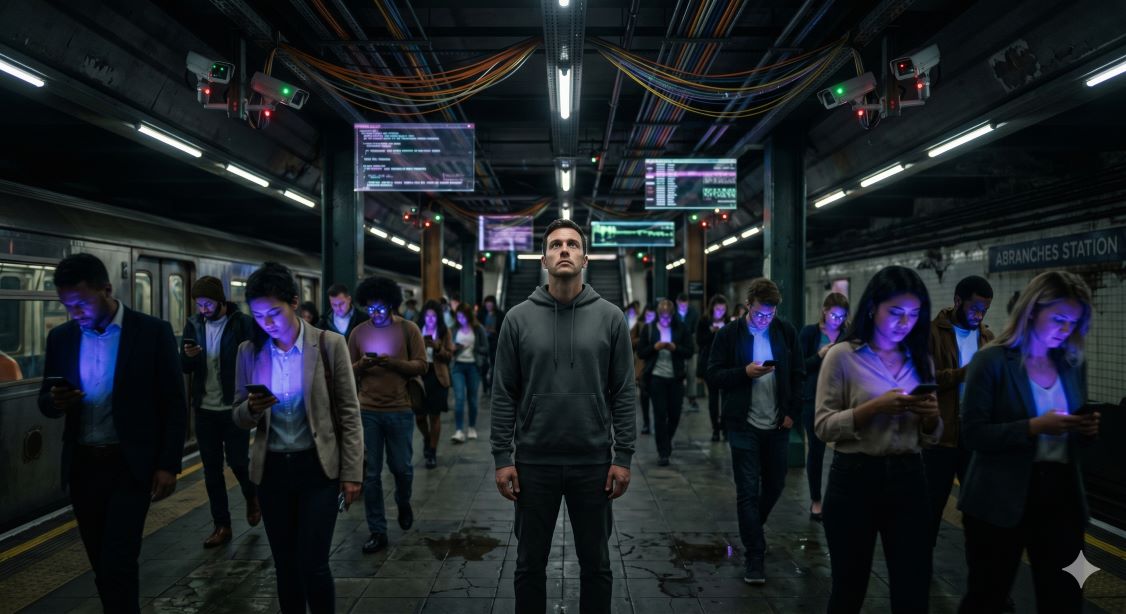
Once you decide to understand the mechanisms that truly move the world, there is no turning back. The veil doesn't just fall—it's ripped away. What seemed like 'technological convenience' reveals itself as an ever-expanding web of surveillance. What was sold as 'social policy' exposes its true face: increasingly sophisticated structures of collective control.
This is the kind of knowledge that liberates but also isolates.
Meanwhile, most people remain immersed in what philosophers call 'dogmatic slumber.' They accept, without resistance, each new app, each more invasive financial system, each limitation disguised as progress. Everything is tolerated as long as it's fast, comfortable, and aesthetically pleasing. Autonomy is fragmented and surrendered in small concessions, nearly imperceptible. One click here, one permission there, and before they realize it, they're surrounded by walls they themselves helped build.
And most disturbing: they don't merely accept it—they actually feel safe within this system.
'I have nothing to hide.'
'Someone must be taking care of this.'
These aren't words of innocence—they're symptoms. Ignorance anesthetizes, simplifies, protects from anguish.
Lucidity, however, exposes. And seeing has a steep price.
You become seen as exaggerated, paranoid, pessimistic, when in reality you're simply describing what's in front of everyone. It's like warning of imminent fire while others discuss interior design. You hear laughter when you mention 'theories,' until they stop being theories. And when that happens, recognition rarely follows. Only silence remains.
This process wears you down. It corrodes. It exhausts. It's the fatigue of perceiving too much in a world that prefers to perceive nothing.
You begin analyzing everything: news, updated terms of service, political decisions, global movements. Everything fits like pieces of a larger system. While the majority gets distracted by glowing screens, you search for who controls the energy behind them.
Then the inevitable question arises: how do you survive this?
The answer doesn't lie in turning back, because that's no longer possible.
The observer's loneliness can destroy or strengthen you. It can be the beginning of bitterness or the awakening of autonomy.
Find others who also see. They exist, though scattered. Transform perception into action, because seeing without acting generates anguish, but seeing and preparing generates power. Accept that lucidity isn't comfort—it's responsibility. Someone must remain awake while the rest sleep. And above all, resist.
Because control systems are most effective when invisible. The future doesn't belong to those who adapt blindly, but to those who face reality without flinching, even when it's uncomfortable, raw, and inevitable.
Knowledge isn't just freedom. It's the last line of defense.