
What Is Foucault’s Panopticon?
Foucault’s Panopticon describes a model of constant observation that shapes behavior and identity through subtle mechanisms of control.
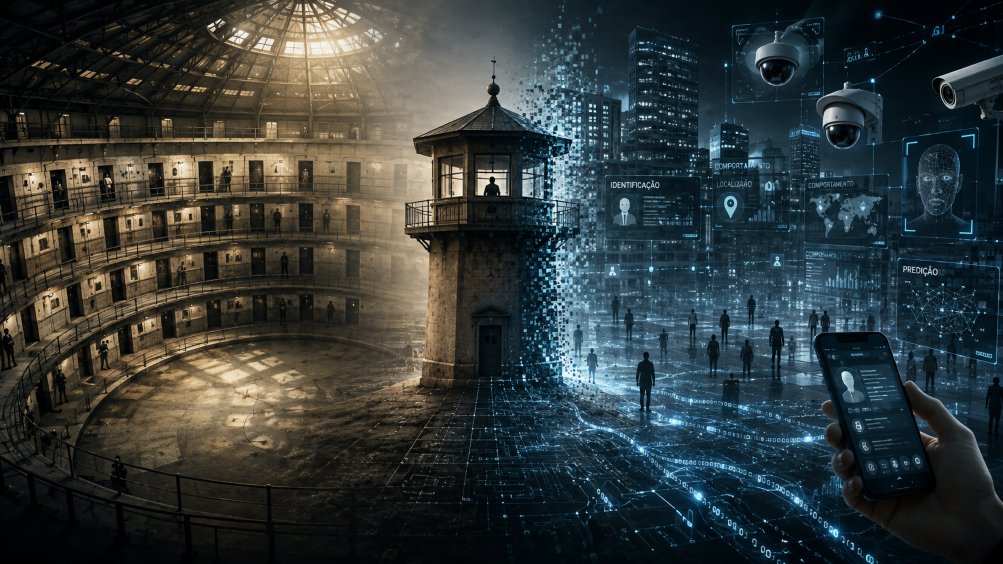
My initiative to write articles was born from the intention to deepen debates about power structures that shape contemporary life. This purpose connects directly to the concept of the "Panopticon" (which even gives the blog its name) developed by Michel Foucault.
The idea became one of the most influential when analyzing how practices of surveillance and control spread through modern institutions. Understanding this notion is essential for interpreting current phenomena related to constant observation, the formation of behaviors, and the construction of subjectivities.
By addressing this theme, panoptico.com.br reinforces its commitment to offering analytical content that encourages critical reflection. The Panopticon is not just an architectural structure. It represents a logic that crosses schools, hospitals, factories, prisons, digital platforms, and professional environments.
For this reason, understanding its origin and its effects is fundamental for anyone seeking to interpret the dynamics of power in contemporary society.
The Origin of the Panopticon
The Panopticon initially emerged as an architectural project designed by Jeremy Bentham in the eighteenth century. The proposal consisted of a circular building with a central tower. In this tower would be the observer. Around it would be individual cells. The layout allowed each person to be seen at any moment without knowing whether they were being watched. This uncertainty produced discipline and self‑control.
Michel Foucault revisited this structure in the book "Discipline and Punish" to explain how modern institutions began to organize surveillance practices.
For him, the Panopticon symbolizes a political technology that transforms individuals into monitored subjects. The architecture imagined by Bentham becomes a metaphor for mechanisms that induce behaviors and shape identities.
Foucault does not limit himself to the physical description of the building. He uses the Panopticon as a conceptual tool to analyze how power is distributed in a capillary manner. Instead of depending only on visible authorities, control begins to operate through norms, routines, records, and continuous observation.
This shift profoundly changes the way modern societies manage bodies and minds.
The Panopticon as a Model of Surveillance
The Panopticon represents a system in which the possibility of being observed generates self‑control. The monitored person does not know whether they are being watched at that moment. This doubt produces behaviors aligned with the institution’s expectations. Power does not need to manifest itself explicitly. It acts through the internalization of surveillance.
Foucault identifies this model in different social spaces. In schools, the organization of classrooms, the arrangement of desks, and the constant presence of evaluations create an environment of continuous observation.
In hospitals, medical records, exams, and routines produce documentation that allows every detail of the patient’s life to be monitored.
In factories, supervisors, timers, and reports shape productivity.
In prisons, bars, cameras, and protocols reinforce discipline.
The Panopticon does not depend solely on physical structures. It manifests itself in administrative practices, bureaucratic systems, and information technologies. The panoptic logic transforms surveillance into an instrument of normalization.
The individual begins to adjust their behavior to avoid punishment, obtain rewards, or simply conform to social expectations.
The Relationship Between Power and Knowledge
One of the central points of Foucault’s analysis is the relationship between power and knowledge. For Foucault, the Panopticon demonstrates how information produced about individuals becomes a tool of control. Records, reports, files, exams, and statistics are not neutral. They organize social life and influence decisions that directly affect people’s existence.
The Panopticon reveals that power is not limited to physical force. It operates through the production of knowledge that classifies, categorizes, and evaluates individuals. This dynamic creates standards of normality and defines behaviors considered acceptable. Those who deviate from these standards may be corrected, reeducated, or punished.
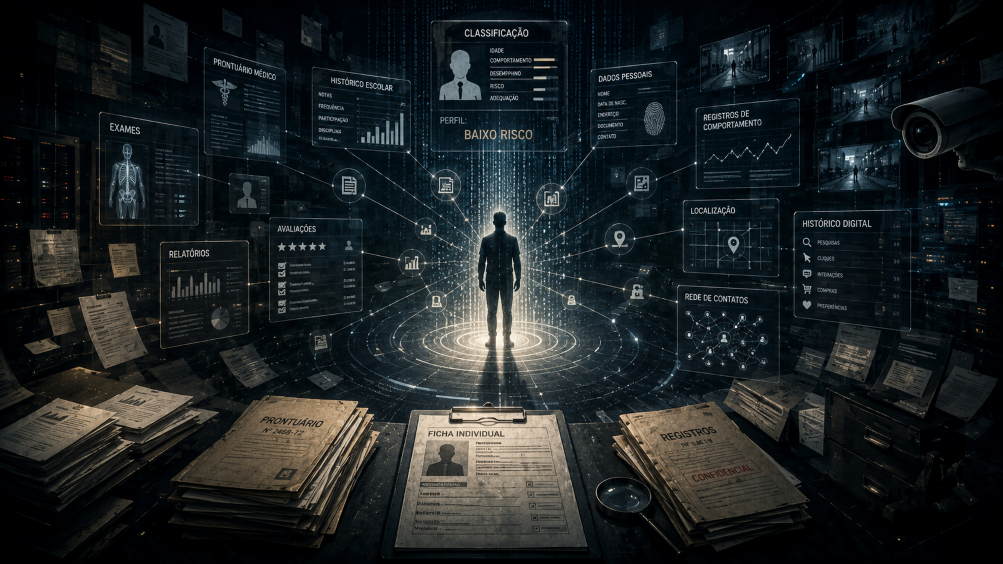
This relationship between power and knowledge is fundamental for understanding how modern institutions function. Surveillance does not serve only to observe. It produces information that feeds management systems. These systems shape public policies, educational practices, health protocols, and business strategies.
The Panopticon in the Digital Age
The expansion of digital technologies intensified panoptic logic. Online platforms record clicks, searches, interactions, preferences, and movements. These data feed algorithms that influence consumption decisions, political choices, and everyday habits. Surveillance becomes invisible and constant.
Social networks, transportation apps, streaming services, and geolocation systems create environments in which every action leaves traces. These traces are analyzed to predict behaviors and direct personalized content. Panoptic logic adapts to the digital world and becomes even more sophisticated.
The digital Panopticon does not depend on a central tower. It operates through servers, databases, and automated systems. Surveillance is distributed across multiple platforms.
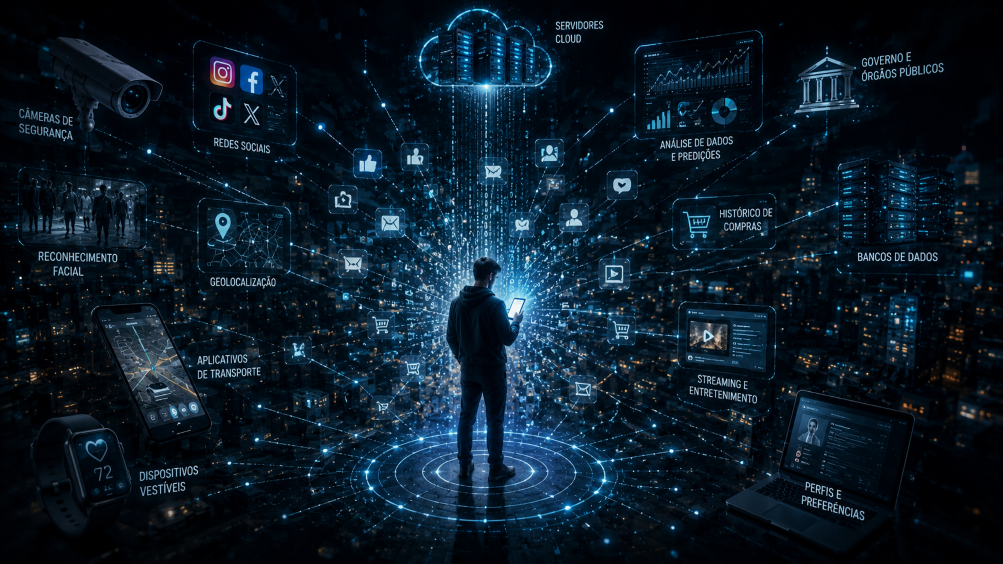
The individual becomes monitored by companies, governments, and even other users. The boundary between public and private becomes increasingly blurred.
The Impact of the Panopticon on Everyday Life
Panoptic logic influences behavior in profound ways. The feeling of being watched modifies attitudes, choices, and expressions. People adjust their appearance, opinions, and actions to avoid judgment or to fit social expectations.
Professional environments use performance metrics, productivity reports, and monitoring systems to track every detail of workers’ routines. Educational institutions adopt platforms that record attendance, participation, and academic performance. Public services use digital identification systems to organize appointments and control access.
This expansion of surveillance creates important ethical dilemmas. The pursuit of security, efficiency, and organization can generate excessively controlled environments. Individual autonomy may be reduced. Privacy may be compromised. Freedom of expression may be limited.
The Panopticon as a Tool for Social Analysis
The concept of the Panopticon is used by researchers from various fields to interpret contemporary phenomena. Sociologists, philosophers, anthropologists, communication scholars, and technology specialists use this notion to analyze how surveillance practices shape social relations.
The Panopticon helps explain how norms are internalized. It clarifies why individuals follow rules even without direct supervision. It reveals how institutions produce desired behaviors. It shows how power is distributed subtly and efficiently.
This analytical tool is useful for interpreting debates about privacy, security, freedom, and autonomy. It allows the identification of risks associated with excessive surveillance. It helps recognize strategies that preserve individual rights. It contributes to the development of public policies that balance protection and freedom.
The Panopticon and the Construction of Subjectivity
Foucault emphasizes that the Panopticon does not act only on behavior. It influences the formation of subjectivity.
Constant surveillance shapes how individuals perceive themselves. The monitored person begins to observe their own actions and internalize norms, adjusting their identity to meet social expectations.
This dynamic produces disciplined subjects. Panoptic logic transforms surveillance into a mechanism of self‑management. The individual begins to control their actions to avoid conflicts, punishments, or exclusion. This internalization of control is one of the most striking characteristics of modern societies.
Conclusion
Foucault’s Panopticon is one of the most powerful tools for understanding how power operates in contemporary life. It reveals that surveillance does not depend only on physical structures. It manifests itself in administrative practices, digital systems, and institutional routines. It shapes behavior, produces knowledge, and constructs subjectivities.
By exploring this concept, panoptico.com.br reaffirms its commitment to offering content that expands understanding of mechanisms that influence social life. Panoptic logic remains present in different contexts. For this reason, understanding its structure and effects is essential for anyone seeking to interpret the dynamics of power in the digital age.